
Biological safety cabinets
SafeFAST Compact
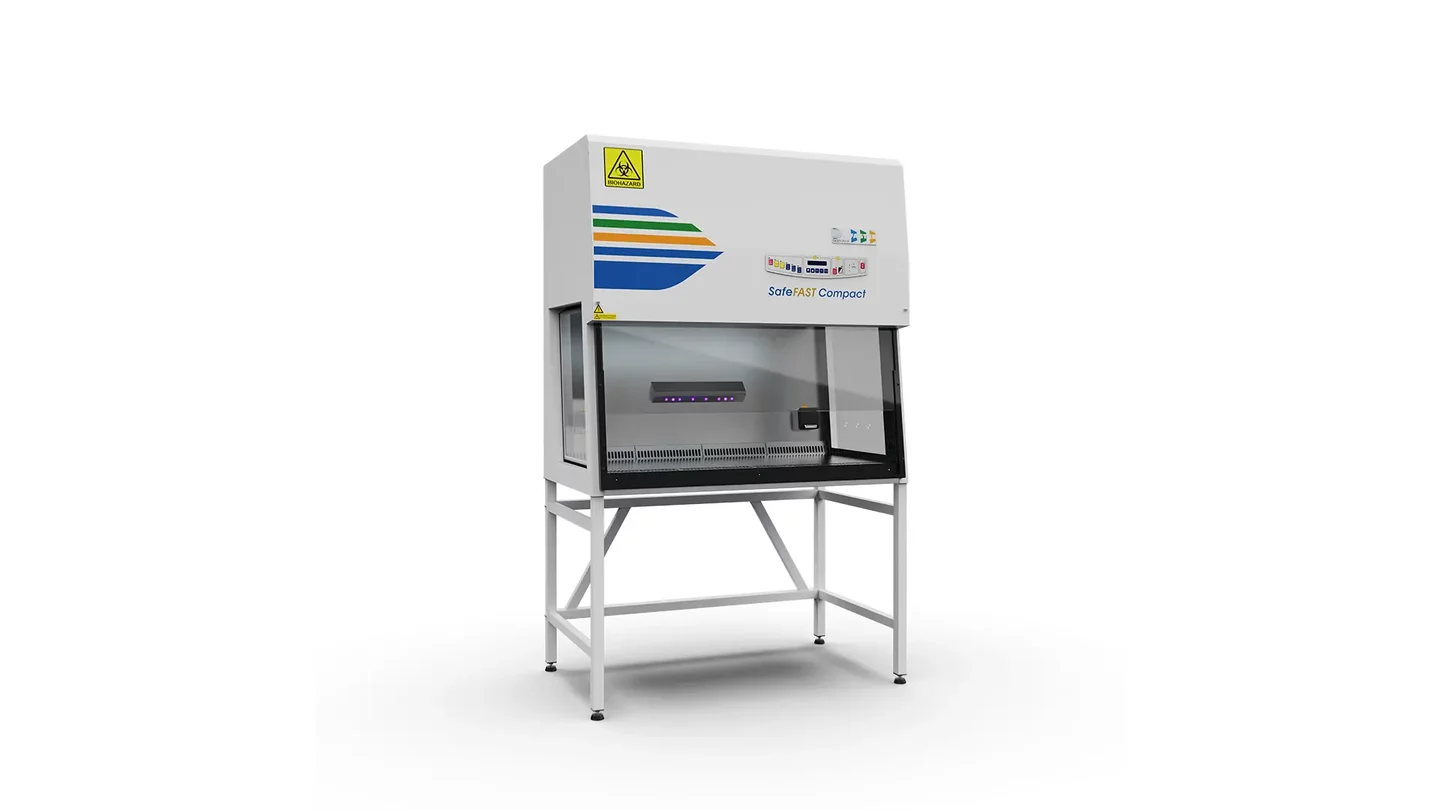
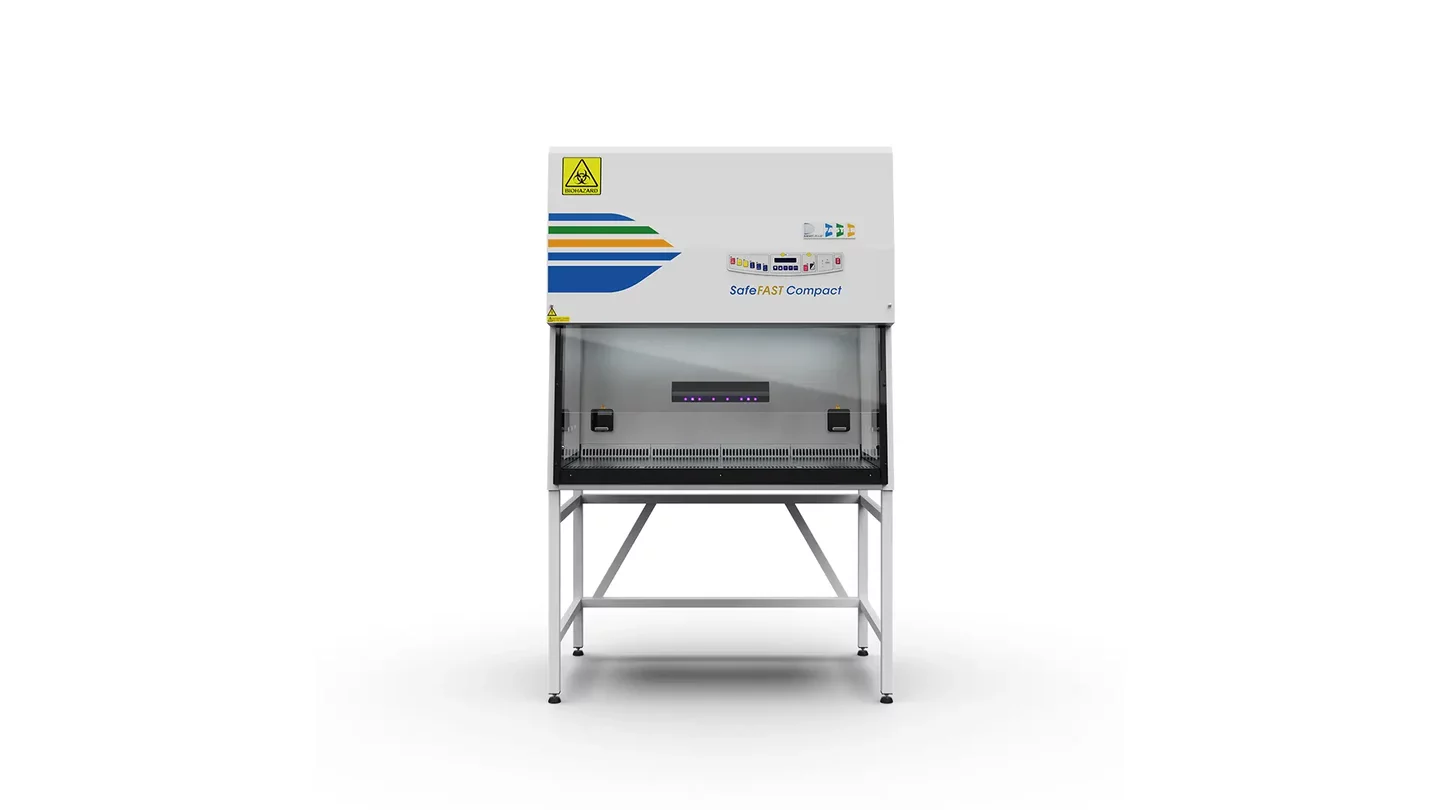
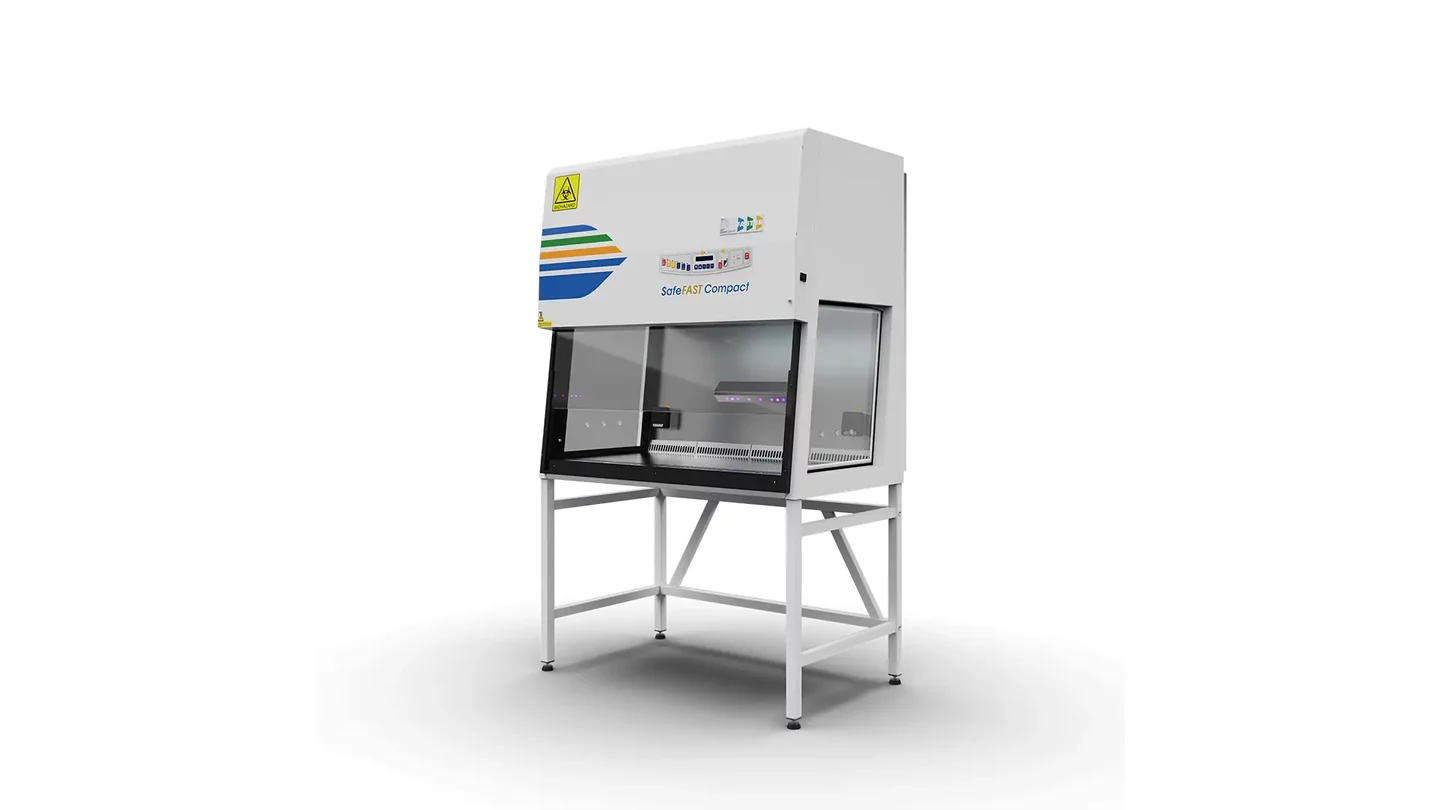
SafeFAST Compact - Compact, powerful and efficient
The compact safety cabinet for maximum microbiological safety in a small space
The SafeFAST Compact is the ideal solution for all laboratories that require maximum protection in a limited space. As a class II biological safety cabinet, it combines efficient airflow, modern technology and a hygienic design in a particularly space-saving format. Developed for a wide range of safety-critical applications, it offers an optimum combination of performance, convenience and flexibility.
Your product benefits at a glance
- Compact design - ideal for small laboratories or confined spaces
- Double DC blowers - efficient, safe and energy-saving
- UV LED disinfection - additional hygienic safety
- Ergonomic and quiet - for comfortable and focussed work
- Flexibly configurable - customised to your requirements
- Robust materials - durable and easy to clean
- Optionally with gas spring-supported front screen for improved access
Maximum safety in a compact form
The SafeFAST Compact is based on the proven airflow principle of class II cabinets:
- 70 % of the air is recirculated through an H14 HEPA main filter
- 30 % of the air is discharged from the device via an H14 HEPA exhaust filter
This air routing ensures comprehensive personal, product and environmental protection in accordance with the requirements of EN 12469:2000.
Main features & equipment
- Two powerful DC fans: For even air distribution, high efficiency and energy-saving operation
- Innovative lighting concept:
- LED tubes: For bright, even illumination of the work area
- UV LED technology: For additional disinfection of the interior outside of working hours
- Stainless steel work surface, divided into four closed, easily removable sectors - ideal for cleaning and maintenance
- Integrated stainless steel drip tray, as with the SafeFAST Classic, protects against spillages and simplifies cleaning
- Rear panel optionally made of painted steel or stainless steel - depending on the need for corrosion resistance and ease of cleaning
- Front panel opening: Motorized lift-up, aerosol-tight front sash (gas spring-assisted version for easier opening)
- Separate plenum areas: For efficient air flow, minimised turbulence and maximum operational safety (similar to the SafeFAST Premium)
Customised configuration options
Back panel material:
- Painted steel for standard applications
- Stainless steel for GMP environments or increased chemical resistance
Additional advantages of the SafeFAST Compact
Low-noise operation
- The noise level can be optimised by specifically adapting the rear panel design (either Classic or Elite design)
- Particularly suitable for long work phases or laboratory environments with several cabinets
Hygienic overall design
- Smooth, abrasion-resistant stainless steel surfaces
- Easy to decontaminate drip tray
- Rounded inner edges for residue-free cleaning
Efficient and safe lighting
- Combination of UV LED and LED tube light ensures maximum visibility and additional surface disinfection
- Reduced power consumption with high light output
Areas of application for the SafeFAST Compact
The compact design and powerful functionality make the SafeFAST Compact ideal for:
- Routine microbiological testing
- Cell culture and tissue laboratories
- Molecular biology research
- Pharmaceutical quality control
- Biotechnology start-ups or mobile laboratories
- University and training laboratories with limited space


| Model Type | SafeFAST Compact 0.9 m | SafeFAST Compact 1.2 m | SafeFAST Compact 1.5 m | SafeFAST Compact 1.8 m |
| General dimensions (W×H×D, mm) | 985 x 1300 x 810 | 1290 x 1300 x 810 | 1595 x 1300 x 810 | 1900 x 1300 x 810 |
| Internal dimensions (W×H×D, mm) | 887 x 670 x 580 | 1192 x 670 x 580 | 1497 x 670 x 580 | 1802 x 670 x 580 |
| Unit height with base frame (mm) | 2150 | 2150 | 2150 | 2150 |
| Working height at seated workstation (mm) | 880 | 880 | 880 | 880 |
| Working opening (mm) | 160 (adjustable) | 160 (adjustable) | 160 (adjustable) | 160 (adjustable) |
